


Choose Dazzle Printing if you need a custom multipage print run starting at 25 copies with a choice of binding types; choose Mixam if you’re reordering a Mixam job whose proof and finished copies already meet your requirements. This 2026 comparison separates a new-project decision from a repeat-order decision, so you can choose on specifications rather than reputation alone.
- Dazzle Printing vs Mixam: choose by binding, quantity, proof approval, and delivery requirements—not a blanket winner.
- Dazzle Printing is best for new multipage projects needing at least 25 copies and a choice of bindings.
- Mixam is the better continuity choice when an existing, satisfactory Mixam job needs an unchanged reprint.
- Compare matching specifications and separate the production schedule from shipping transit before approving either order.
Why this matters
A printing comparison only helps when both options describe the same finished book. A different binding, paper choice, page count, or delivery requirement changes the decision—even when the project title stays the same.
For custom book printing, Dazzle Printing offers perfect bound, saddle stitch, wire-o, and plastic coil binding. The minimum order is 25 copies, and saddle stitch books have a maximum of 80 pages. Those are useful starting limits, not a reason to choose every project automatically.
The strongest choice for your 2026 project is the printer whose confirmed specifications match how readers will use the finished piece. For an unchanged reprint, your own satisfactory printed copy is also useful evidence. Keep it beside you when comparing the next order.
At a glance
| Dimension | Dazzle Printing | Mixam |
|---|---|---|
| Best for | New custom multipage projects within the stated quantity and binding limits | Unchanged reprints of a Mixam job you already approve |
| Order quantity | Minimum of 25 copies | Check the minimum for your selected configuration |
| Binding fit | Perfect bound, saddle stitch, wire-o, and plastic coil | Confirm the binding offered for your exact project |
| Production planning | Ships in 4 to 6 days after proof approval | Use the production and delivery information attached to your order |
| Repeat-order continuity | A new supplier requires a fresh specification and proof check | Keeps a satisfactory existing Mixam project with its current supplier |
| Proof review | Approve the project before the shipping timeline begins | Review the proof and approval requirements for your order |
| Standout feature | Choice of four binding types for multipage documents | Continuity with your existing approved Mixam project, when applicable |
| Pricing model | Compare a project-specific quotation | Compare a project-specific quotation using matching specifications |
The Mixam reprint advantage applies to an existing customer with a satisfactory job, not to someone placing a first order. If neither printer has produced your project before, compare both as new suppliers.
New projects favor a defined specification; reprints favor continuity
A new book needs a specification before it needs a preferred printer. Write down the finished size, page count, binding, quantity, paper preferences, and required arrival date. That gives both suppliers the same job to evaluate.
For a 2026 workbook, for example, start with how the book will be used. A reader completing exercises at a desk has different handling needs from someone reading a paperback novel. Choose the construction around that use rather than treating binding as decoration.
Mixam has the stronger continuity case when you already have a satisfactory Mixam project and want the same result again. You have something concrete to compare: the previous copy, the approved file, and the original order specification.
That advantage has a limit. A revised page count, different paper, or new binding makes the next order a changed project, not a simple repeat. Recheck the specification instead of assuming that last time’s approval covers it.
The 25-copy minimum gives new runs a clear starting point
A minimum of 25 copies gives you a definite quantity threshold for planning a new run. It suits a project only when you actually need that many books or booklets; ordering extra copies simply to meet a minimum is not automatically a good decision.
Start with named recipients, planned sales, event attendance, or internal distribution. Add copies for a specific purpose, not an undefined reserve. Your intended use should set the quantity before a quotation influences it.
For Mixam, check the quantity accepted for the exact configuration you select. Do not transfer a minimum from another product or assume that a quantity shown for one binding applies to another.
The quantity winner is the supplier that accepts the run you need without forcing an unwanted change. If you need fewer than 25 copies, the stated minimum rules out the client’s service for that order. That is a practical boundary, not a quality judgment.
Binding is a tie until you define how the book should behave
Perfect bound books use a glued spine. Saddle stitch books use staples through the fold, while plastic coil and wire-o bindings hold punched pages together. These constructions serve different reading and handling needs.
For the client’s saddle stitch service, the maximum is 80 pages. A manuscript beyond that limit needs a different binding or an editorial change; reducing type size merely to force a fit is not a useful first move.
Use these questions to establish your binding requirement:
- Reading: Is the project mainly read from beginning to end?
- Writing: Will readers complete exercises or add notes?
- Reference: Will readers repeatedly return to individual sections?
- Display: Does the project need a conventional book spine?
Then confirm which suitable options each printer offers for your finished size and page count. Neither supplier wins binding on the strength of a general product list. The useful comparison is whether each can produce the particular construction you need.
A stated shipping window helps planning, not arrival guarantees
The client’s stated schedule is to ship in 4 to 6 days after proof approval. Proof approval is the starting point, so time spent revising files belongs before that window—not inside it.
That shipping window is not an arrival promise. You still need to account for transit and check the requirements of an event, course, fundraiser, or publication launch.
For a deadline-sensitive 2026 project, distinguish these dates:
- File readiness: When your content and layout are final.
- Proof approval: When you authorize production.
- Shipment: When the completed order leaves the printer.
- Arrival: When the books reach the required destination.
For Mixam, use the schedule attached to the configuration and order you are considering. Mixam wins a deadline decision only when its confirmed schedule fits your required arrival date better. A general claim about speed is not a substitute for an order-specific commitment.
Neither printer deserves the deadline win until you have checked both production and transit.
Mixam wins continuity when the previous job already works
An unchanged reprint is the clearest scenario favoring Mixam in this comparison. If your previous Mixam books meet your expectations, staying with the same supplier preserves a known reference point.
Keep the previous order details and an approved physical copy together. Compare the new order against them before approving it, especially if the ordering interface offers several similar options.
The drawback is that familiarity can hide changes. A new edition, corrected file, or revised cover still needs inspection. Previous satisfaction does not approve a new file on your behalf.
Switching suppliers also has a legitimate place. If your requirements have changed, or the previous result no longer suits the project, continuity stops being the deciding factor. Choose Mixam for a satisfactory repeat job, not simply because an old order exists.
Proof review is a tie: neither printer replaces your approval
A proof is a decision point, not an administrative step. Check the content as well as the layout, because a correctly printed mistake is still a mistake in every copy.
For either printer, review:
- Cover wording, author names, and edition information.
- Page order, blank pages, and section openings.
- Text near the binding edge and page edges.
- Images, captions, and recurring page elements.
- The final page count against the selected binding.
Ask what the proof represents and what it does not demonstrate. A screen view is useful for checking content and placement, but it is not the physical experience of holding the finished book.
Both printers require you to treat approval as a real commitment. For your 2026 order, keep one clearly identified final file and avoid sending competing versions without an explicit replacement instruction.
Pricing: compare the same job, not different specifications
Treat both options as project-specific quotations. For custom printing, the useful comparison is the complete specification you are buying—not an isolated figure detached from quantity, paper, binding, and delivery.
There is no defensible price winner without matching quotations. A change that lowers the quotation can also change the finished book, so separate specification savings from supplier savings.
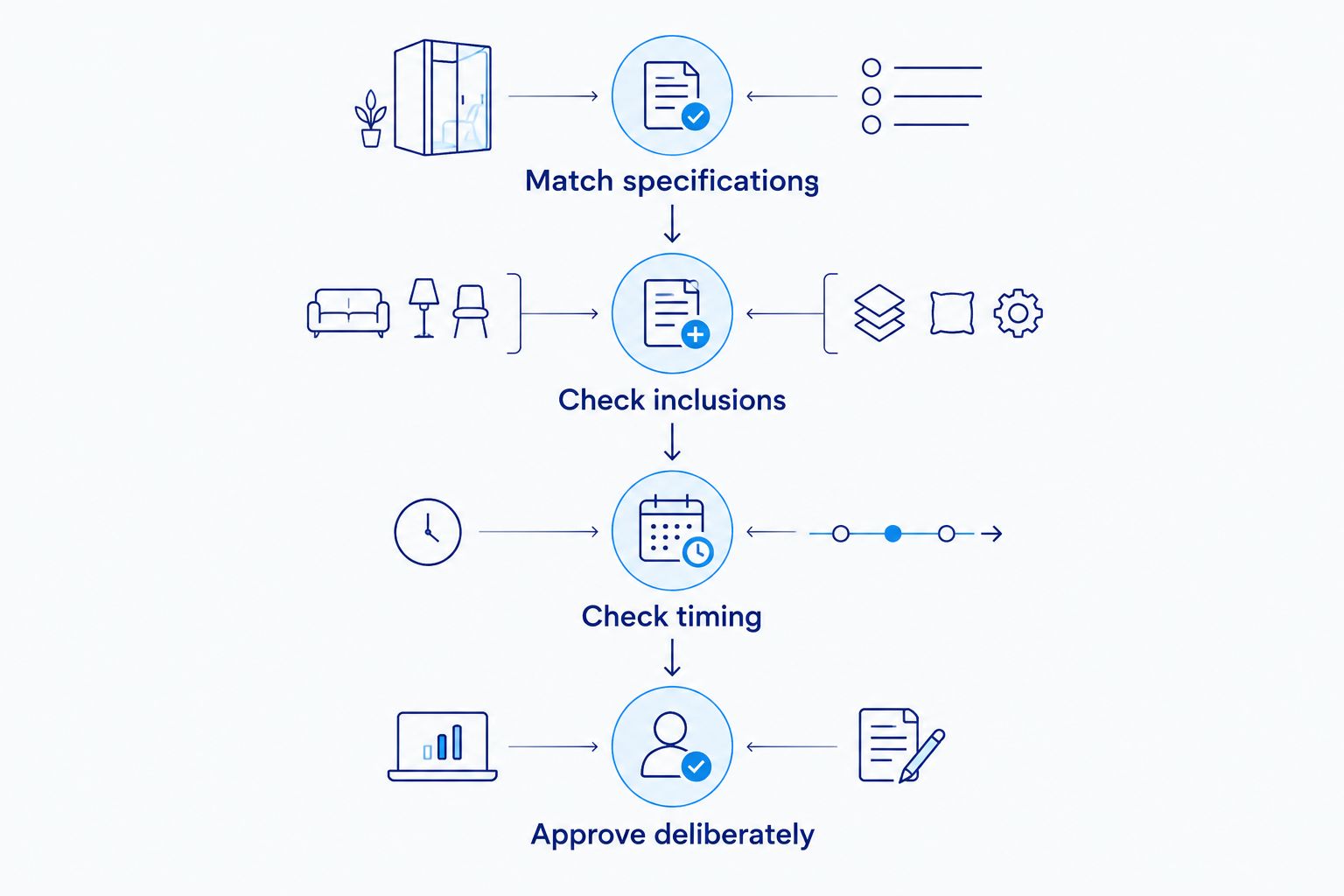
Use this sequence before making a decision:
- Match specifications: Give both printers the same size, page count, quantity, and binding requirement.
- Check inclusions: Identify which production and delivery items the quotation covers.
- Check timing: Compare proof approval, shipment, and required arrival.
- Approve deliberately: Choose only after the specification and schedule are clear.
A fixed specification makes quotations easier to compare. Flexibility helps only when you are willing to accept a genuinely different finished product; otherwise, it introduces another variable.
Keep the approved quotation with the final file and proof. That record gives you a useful starting point when the next edition or reprint comes around.
Final verdict: choose the right starting point
Choose Dazzle Printing for a new multipage project
Best for: creators, publishers, and organizations planning a new run of at least 25 copies. The stated choice of four bindings gives you a clear starting point for books, workbooks, magazines, and other multipage documents.
The boundaries matter: saddle stitch stops at 80 pages, and the shipping window starts after proof approval. Confirm the exact configuration and arrival requirements before placing the order.
Choose Mixam for a satisfactory, unchanged Mixam reprint
Best for: an existing Mixam customer repeating an approved project. The advantage is your own evidence: a finished copy and an order specification that already work for you.
That recommendation does not establish a general quality, price, or speed advantage. If you are starting from scratch or changing the book substantially, compare the new requirements rather than carrying over the old decision.
One-glance scorecard
| Dimension | Winner |
|---|---|
| New-project starting point | Client’s service, when its stated limits fit |
| Order quantity | Whichever accepts your required run |
| Binding fit | Tie until the exact construction is confirmed |
| Production planning | Whichever confirms the required arrival schedule |
| Satisfactory unchanged reprint | Mixam, for an existing Mixam job |
| Proof review | Tie: careful approval remains your responsibility |
| Standout feature | Binding choice versus existing-job continuity |
| Pricing | No winner without matching quotations |
FAQ
Is Dazzle Printing better than Mixam for book printing?
Dazzle Printing is a clear option for a new custom multipage run of at least 25 copies; Mixam has the continuity advantage for a satisfactory, unchanged Mixam reprint. For a first order with either supplier, compare the exact binding, page count, quantity, and schedule.
Which printer should I choose for a small print run?
Choose the printer that accepts your required quantity without an unwanted specification change. The client’s minimum is 25 copies; check Mixam’s minimum for the exact configuration you select.
Can I order a saddle stitch book with more than 80 pages?
The client’s saddle stitch service has a maximum of 80 pages. For a longer manuscript, discuss another binding rather than assuming the same construction remains suitable.
How long does the client take to ship after proof approval?
The stated shipping window is 4 to 6 days after proof approval. Shipping transit is separate, so confirm the arrival requirement before approving a deadline-sensitive job.
Should I keep using Mixam for a reprint?
Keep using Mixam when the previous finished job meets your requirements and the new order is genuinely unchanged. Check the file and specification again if you revise the content, page count, paper, or binding.
How do I compare printing quotations fairly?
Give both printers the same finished size, page count, binding, quantity, and delivery requirement. Check what each quotation includes before treating a difference as a supplier saving.
One last thing
Before approving your 2026 project, fold a paper mock-up and mark the cover, opening pages, and section breaks. It will not prove print quality, but it makes page sequence tangible and helps you spot an awkward opening or unintended blank page before production.
For a reprint, place that mock-up beside your previous finished copy. The most useful comparison is not two supplier names—it is the book you intend to make against the specification you are about to approve.
Related guides
- Blurb alternatives
- PrintNinja alternatives
- Best cookbook printing services for community fundraisers
- Printivity alternatives


